United States and China reopen talks on trade, AI and critical minerals
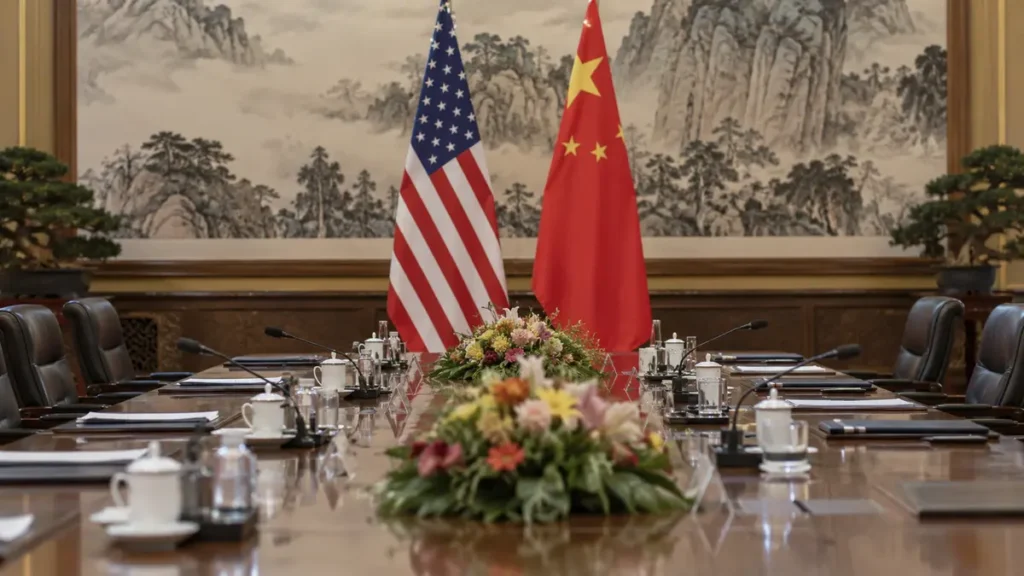
Senior representatives from the United States and China opened talks in New York covering trade, artificial-intelligence safety and critical-mineral supplies. The discussions precede an expected presidential meeting and come as a trade truce approaches its deadline. Even limited agreements could help stabilize supply chains and technology markets.
The starting point
The story described by United States and China reopen talks on trade, AI and critical minerals cannot be understood through a headline alone. The verified starting point is this: Senior representatives from the United States and China opened talks in New York covering trade, artificial-intelligence safety and critical-mineral supplies. The discussions precede an expected presidential meeting and come as a trade truce approaches its deadline. Even limited agreements could help stabilize supply chains and technology markets. That statement captures the immediate event but not the whole picture. Public decisions, economic incentives, technical constraints and international relationships have usually been developing for much longer. Readers should separate what has happened, what has merely been announced and what remains a forecast. That distinction prevents a promise from being treated like a measured result and makes later developments easier to evaluate. It also helps explain why two accurate reports can emphasize different aspects of the same event without necessarily contradicting each other.
Looking at the issue through the starting point connects the event to wider systems. A decision made today can have very different results depending on rules, available resources and the ability of institutions to implement it. Even when leaders describe a clear goal, delivery can take longer than expected and costs may fall unevenly across regions or groups. Responsible analysis therefore resists a final verdict too early. It follows documents, later data, reactions from affected parties and unintended consequences. In this case, the central test will be the distance between public commitments, operational steps and outcomes that can be independently observed.
Another question is how the story is presented. Early coverage often highlights conflict, the largest number or the strongest quotation, while technical details receive less attention. Yet those details frequently determine whether change lasts. Readers should ask who finances the plan, which authorities supervise it, what indicators will be published and how often. Independent expertise matters, as does separating analysis from advocacy or marketing. Applying those questions to United States and China reopen talks on trade, AI and critical minerals creates a more reliable understanding than accepting one narrative at face value. It also makes uncertainty visible instead of treating every unknown as evidence for a preferred conclusion.
Concrete signals will matter in the months ahead: official timetables, signed agreements, budgets, comparable statistics, audits and regulatory changes. The absence of those signals can also be meaningful, pointing to delay, political obstacles or weaker operational capacity than expected. Effects will not be identical in every country or industry because local conditions, access to finance, network quality and public trust vary. Following this story therefore means revising judgments when new facts appear rather than defending an early conclusion. The source linked below provides the initial reference; later claims should also be checked against documents and institutions directly involved.
What happened
The story described by United States and China reopen talks on trade, AI and critical minerals cannot be understood through a headline alone. The verified starting point is this: Senior representatives from the United States and China opened talks in New York covering trade, artificial-intelligence safety and critical-mineral supplies. The discussions precede an expected presidential meeting and come as a trade truce approaches its deadline. Even limited agreements could help stabilize supply chains and technology markets. That statement captures the immediate event but not the whole picture. Public decisions, economic incentives, technical constraints and international relationships have usually been developing for much longer. Readers should separate what has happened, what has merely been announced and what remains a forecast. That distinction prevents a promise from being treated like a measured result and makes later developments easier to evaluate. It also helps explain why two accurate reports can emphasize different aspects of the same event without necessarily contradicting each other.
Looking at the issue through what happened connects the event to wider systems. A decision made today can have very different results depending on rules, available resources and the ability of institutions to implement it. Even when leaders describe a clear goal, delivery can take longer than expected and costs may fall unevenly across regions or groups. Responsible analysis therefore resists a final verdict too early. It follows documents, later data, reactions from affected parties and unintended consequences. In this case, the central test will be the distance between public commitments, operational steps and outcomes that can be independently observed.
Why this story matters
The story described by United States and China reopen talks on trade, AI and critical minerals cannot be understood through a headline alone. The verified starting point is this: Senior representatives from the United States and China opened talks in New York covering trade, artificial-intelligence safety and critical-mineral supplies. The discussions precede an expected presidential meeting and come as a trade truce approaches its deadline. Even limited agreements could help stabilize supply chains and technology markets. That statement captures the immediate event but not the whole picture. Public decisions, economic incentives, technical constraints and international relationships have usually been developing for much longer. Readers should separate what has happened, what has merely been announced and what remains a forecast. That distinction prevents a promise from being treated like a measured result and makes later developments easier to evaluate. It also helps explain why two accurate reports can emphasize different aspects of the same event without necessarily contradicting each other.
Looking at the issue through why this story matters connects the event to wider systems. A decision made today can have very different results depending on rules, available resources and the ability of institutions to implement it. Even when leaders describe a clear goal, delivery can take longer than expected and costs may fall unevenly across regions or groups. Responsible analysis therefore resists a final verdict too early. It follows documents, later data, reactions from affected parties and unintended consequences. In this case, the central test will be the distance between public commitments, operational steps and outcomes that can be independently observed.
Another question is how the story is presented. Early coverage often highlights conflict, the largest number or the strongest quotation, while technical details receive less attention. Yet those details frequently determine whether change lasts. Readers should ask who finances the plan, which authorities supervise it, what indicators will be published and how often. Independent expertise matters, as does separating analysis from advocacy or marketing. Applying those questions to United States and China reopen talks on trade, AI and critical minerals creates a more reliable understanding than accepting one narrative at face value. It also makes uncertainty visible instead of treating every unknown as evidence for a preferred conclusion.
The international context
The story described by United States and China reopen talks on trade, AI and critical minerals cannot be understood through a headline alone. The verified starting point is this: Senior representatives from the United States and China opened talks in New York covering trade, artificial-intelligence safety and critical-mineral supplies. The discussions precede an expected presidential meeting and come as a trade truce approaches its deadline. Even limited agreements could help stabilize supply chains and technology markets. That statement captures the immediate event but not the whole picture. Public decisions, economic incentives, technical constraints and international relationships have usually been developing for much longer. Readers should separate what has happened, what has merely been announced and what remains a forecast. That distinction prevents a promise from being treated like a measured result and makes later developments easier to evaluate. It also helps explain why two accurate reports can emphasize different aspects of the same event without necessarily contradicting each other.
Looking at the issue through the international context connects the event to wider systems. A decision made today can have very different results depending on rules, available resources and the ability of institutions to implement it. Even when leaders describe a clear goal, delivery can take longer than expected and costs may fall unevenly across regions or groups. Responsible analysis therefore resists a final verdict too early. It follows documents, later data, reactions from affected parties and unintended consequences. In this case, the central test will be the distance between public commitments, operational steps and outcomes that can be independently observed.
Concrete signals will matter in the months ahead: official timetables, signed agreements, budgets, comparable statistics, audits and regulatory changes. The absence of those signals can also be meaningful, pointing to delay, political obstacles or weaker operational capacity than expected. Effects will not be identical in every country or industry because local conditions, access to finance, network quality and public trust vary. Following this story therefore means revising judgments when new facts appear rather than defending an early conclusion. The source linked below provides the initial reference; later claims should also be checked against documents and institutions directly involved.
Actors and institutions
The story described by United States and China reopen talks on trade, AI and critical minerals cannot be understood through a headline alone. The verified starting point is this: Senior representatives from the United States and China opened talks in New York covering trade, artificial-intelligence safety and critical-mineral supplies. The discussions precede an expected presidential meeting and come as a trade truce approaches its deadline. Even limited agreements could help stabilize supply chains and technology markets. That statement captures the immediate event but not the whole picture. Public decisions, economic incentives, technical constraints and international relationships have usually been developing for much longer. Readers should separate what has happened, what has merely been announced and what remains a forecast. That distinction prevents a promise from being treated like a measured result and makes later developments easier to evaluate. It also helps explain why two accurate reports can emphasize different aspects of the same event without necessarily contradicting each other.
Looking at the issue through actors and institutions connects the event to wider systems. A decision made today can have very different results depending on rules, available resources and the ability of institutions to implement it. Even when leaders describe a clear goal, delivery can take longer than expected and costs may fall unevenly across regions or groups. Responsible analysis therefore resists a final verdict too early. It follows documents, later data, reactions from affected parties and unintended consequences. In this case, the central test will be the distance between public commitments, operational steps and outcomes that can be independently observed.
Another question is how the story is presented. Early coverage often highlights conflict, the largest number or the strongest quotation, while technical details receive less attention. Yet those details frequently determine whether change lasts. Readers should ask who finances the plan, which authorities supervise it, what indicators will be published and how often. Independent expertise matters, as does separating analysis from advocacy or marketing. Applying those questions to United States and China reopen talks on trade, AI and critical minerals creates a more reliable understanding than accepting one narrative at face value. It also makes uncertainty visible instead of treating every unknown as evidence for a preferred conclusion.
The economic dimension
The story described by United States and China reopen talks on trade, AI and critical minerals cannot be understood through a headline alone. The verified starting point is this: Senior representatives from the United States and China opened talks in New York covering trade, artificial-intelligence safety and critical-mineral supplies. The discussions precede an expected presidential meeting and come as a trade truce approaches its deadline. Even limited agreements could help stabilize supply chains and technology markets. That statement captures the immediate event but not the whole picture. Public decisions, economic incentives, technical constraints and international relationships have usually been developing for much longer. Readers should separate what has happened, what has merely been announced and what remains a forecast. That distinction prevents a promise from being treated like a measured result and makes later developments easier to evaluate. It also helps explain why two accurate reports can emphasize different aspects of the same event without necessarily contradicting each other.
Looking at the issue through the economic dimension connects the event to wider systems. A decision made today can have very different results depending on rules, available resources and the ability of institutions to implement it. Even when leaders describe a clear goal, delivery can take longer than expected and costs may fall unevenly across regions or groups. Responsible analysis therefore resists a final verdict too early. It follows documents, later data, reactions from affected parties and unintended consequences. In this case, the central test will be the distance between public commitments, operational steps and outcomes that can be independently observed.
Technology, data and operational capacity
The story described by United States and China reopen talks on trade, AI and critical minerals cannot be understood through a headline alone. The verified starting point is this: Senior representatives from the United States and China opened talks in New York covering trade, artificial-intelligence safety and critical-mineral supplies. The discussions precede an expected presidential meeting and come as a trade truce approaches its deadline. Even limited agreements could help stabilize supply chains and technology markets. That statement captures the immediate event but not the whole picture. Public decisions, economic incentives, technical constraints and international relationships have usually been developing for much longer. Readers should separate what has happened, what has merely been announced and what remains a forecast. That distinction prevents a promise from being treated like a measured result and makes later developments easier to evaluate. It also helps explain why two accurate reports can emphasize different aspects of the same event without necessarily contradicting each other.
Looking at the issue through technology, data and operational capacity connects the event to wider systems. A decision made today can have very different results depending on rules, available resources and the ability of institutions to implement it. Even when leaders describe a clear goal, delivery can take longer than expected and costs may fall unevenly across regions or groups. Responsible analysis therefore resists a final verdict too early. It follows documents, later data, reactions from affected parties and unintended consequences. In this case, the central test will be the distance between public commitments, operational steps and outcomes that can be independently observed.
Another question is how the story is presented. Early coverage often highlights conflict, the largest number or the strongest quotation, while technical details receive less attention. Yet those details frequently determine whether change lasts. Readers should ask who finances the plan, which authorities supervise it, what indicators will be published and how often. Independent expertise matters, as does separating analysis from advocacy or marketing. Applying those questions to United States and China reopen talks on trade, AI and critical minerals creates a more reliable understanding than accepting one narrative at face value. It also makes uncertainty visible instead of treating every unknown as evidence for a preferred conclusion.
Concrete signals will matter in the months ahead: official timetables, signed agreements, budgets, comparable statistics, audits and regulatory changes. The absence of those signals can also be meaningful, pointing to delay, political obstacles or weaker operational capacity than expected. Effects will not be identical in every country or industry because local conditions, access to finance, network quality and public trust vary. Following this story therefore means revising judgments when new facts appear rather than defending an early conclusion. The source linked below provides the initial reference; later claims should also be checked against documents and institutions directly involved.
Effects on people
The story described by United States and China reopen talks on trade, AI and critical minerals cannot be understood through a headline alone. The verified starting point is this: Senior representatives from the United States and China opened talks in New York covering trade, artificial-intelligence safety and critical-mineral supplies. The discussions precede an expected presidential meeting and come as a trade truce approaches its deadline. Even limited agreements could help stabilize supply chains and technology markets. That statement captures the immediate event but not the whole picture. Public decisions, economic incentives, technical constraints and international relationships have usually been developing for much longer. Readers should separate what has happened, what has merely been announced and what remains a forecast. That distinction prevents a promise from being treated like a measured result and makes later developments easier to evaluate. It also helps explain why two accurate reports can emphasize different aspects of the same event without necessarily contradicting each other.
Looking at the issue through effects on people connects the event to wider systems. A decision made today can have very different results depending on rules, available resources and the ability of institutions to implement it. Even when leaders describe a clear goal, delivery can take longer than expected and costs may fall unevenly across regions or groups. Responsible analysis therefore resists a final verdict too early. It follows documents, later data, reactions from affected parties and unintended consequences. In this case, the central test will be the distance between public commitments, operational steps and outcomes that can be independently observed.
Infrastructure and resources
The story described by United States and China reopen talks on trade, AI and critical minerals cannot be understood through a headline alone. The verified starting point is this: Senior representatives from the United States and China opened talks in New York covering trade, artificial-intelligence safety and critical-mineral supplies. The discussions precede an expected presidential meeting and come as a trade truce approaches its deadline. Even limited agreements could help stabilize supply chains and technology markets. That statement captures the immediate event but not the whole picture. Public decisions, economic incentives, technical constraints and international relationships have usually been developing for much longer. Readers should separate what has happened, what has merely been announced and what remains a forecast. That distinction prevents a promise from being treated like a measured result and makes later developments easier to evaluate. It also helps explain why two accurate reports can emphasize different aspects of the same event without necessarily contradicting each other.
Looking at the issue through infrastructure and resources connects the event to wider systems. A decision made today can have very different results depending on rules, available resources and the ability of institutions to implement it. Even when leaders describe a clear goal, delivery can take longer than expected and costs may fall unevenly across regions or groups. Responsible analysis therefore resists a final verdict too early. It follows documents, later data, reactions from affected parties and unintended consequences. In this case, the central test will be the distance between public commitments, operational steps and outcomes that can be independently observed.
Another question is how the story is presented. Early coverage often highlights conflict, the largest number or the strongest quotation, while technical details receive less attention. Yet those details frequently determine whether change lasts. Readers should ask who finances the plan, which authorities supervise it, what indicators will be published and how often. Independent expertise matters, as does separating analysis from advocacy or marketing. Applying those questions to United States and China reopen talks on trade, AI and critical minerals creates a more reliable understanding than accepting one narrative at face value. It also makes uncertainty visible instead of treating every unknown as evidence for a preferred conclusion.
Risks and limits of the available information
The story described by United States and China reopen talks on trade, AI and critical minerals cannot be understood through a headline alone. The verified starting point is this: Senior representatives from the United States and China opened talks in New York covering trade, artificial-intelligence safety and critical-mineral supplies. The discussions precede an expected presidential meeting and come as a trade truce approaches its deadline. Even limited agreements could help stabilize supply chains and technology markets. That statement captures the immediate event but not the whole picture. Public decisions, economic incentives, technical constraints and international relationships have usually been developing for much longer. Readers should separate what has happened, what has merely been announced and what remains a forecast. That distinction prevents a promise from being treated like a measured result and makes later developments easier to evaluate. It also helps explain why two accurate reports can emphasize different aspects of the same event without necessarily contradicting each other.
Looking at the issue through risks and limits of the available information connects the event to wider systems. A decision made today can have very different results depending on rules, available resources and the ability of institutions to implement it. Even when leaders describe a clear goal, delivery can take longer than expected and costs may fall unevenly across regions or groups. Responsible analysis therefore resists a final verdict too early. It follows documents, later data, reactions from affected parties and unintended consequences. In this case, the central test will be the distance between public commitments, operational steps and outcomes that can be independently observed.
Concrete signals will matter in the months ahead: official timetables, signed agreements, budgets, comparable statistics, audits and regulatory changes. The absence of those signals can also be meaningful, pointing to delay, political obstacles or weaker operational capacity than expected. Effects will not be identical in every country or industry because local conditions, access to finance, network quality and public trust vary. Following this story therefore means revising judgments when new facts appear rather than defending an early conclusion. The source linked below provides the initial reference; later claims should also be checked against documents and institutions directly involved.
Sources and updates
Source: Reuters, September 20, 2026.